Surname List
Name Index
Sources
First Generation
1. 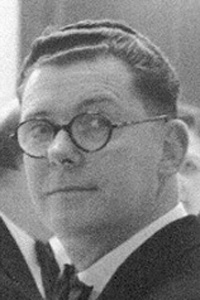 1,2 Robert James "Bob" WILKINS MSc(Eng) FICE FIStructE1,2 was born on 12 February 1910 at 28 Summer Street in Southwark, Surrey.1,2 He appeared in the census in the household of his father and mother Robert George "Bob" WILKINS and Ethel Maud BLOTT on 2 April 1911 at 21 Newcomen Street in Southwark, Surrey.3 He was educated from 1915 to 1923 at St Joseph's School in Southwark, Surrey. Bob was educated from 1923 to 1926 at Borough Polytechnic Technical School, Borough Road in Southwark, Surrey.4 He matriculated in 1926. In 1926 he was an employee in the workshop at Molins Machine Company Limited in Deptford, Kent.4 From 1926 to 1940 he was a Draughtsman at Ransomes & Rapier, Victoria Street in Westminster, Middlesex.4,5 The company manufactured sluice gates and heavy equipment. Bob was educated part-time in engineering from 1927 to 1932 at Borough Polytechnic Technical School, Borough Road in Southwark, Surrey.4 He studied for an Ordinary National Certificate then a Higher National Certificate. The Borough Polytechnic later became the London South Bank University. He was educated part-time in civil engineering from 1933 to 1937 at Battersea Polytechnic in Battersea, Surrey.4 He studied for a degree in civil and structural engineering. Battersea Polytechnic later moved to Guildford and became the University of Surrey. He received a Bachelor of Science (Engineering) degree in 1937 at the University of London in Bloomsbury, Middlesex.4,6 He graduated with First Class Honours. From 1937 to 1940, Bob was Visiting Lecturer in materials and engineering science at Borough Polytechnic Technical School, Borough Road in Southwark, Surrey.4 From 1940 to 1951 he was a Lecturer then Senior Lecturer in Structural Engineering at Northampton Polytechnic in Finsbury, Middlesex.4 At Northampton Polytechnic, he pioneered the use of electric resistance strain gauges for structural engineering experiments and wrote a number of articles in technical publications. He also wrote a book on Engineering Drawing in collaboration with a colleague, H T Davey. For much of this period, he was a member of the Regional Advisory Committee for Higher Technical Education and Chairman of the Staff-Student Council. Northampton Polytechnic later became the City University London. He served in the Territorial Army as a 2nd Lieutenant (later Acting Captain) in the University of London Senior Training Corps from 1943 to 1946.4,7,8,9,10,11,12 During the Second World War, the University of London Senior Training Corps (ULSTC) was the officer training corps for the University of London. The Officers Training Corps (OTC) was and still is a part of the British Army that provides military leadership training to students at British universities. Its members are classed as Officer Cadets and are members of the Territorial Army, paid when on duty. Cadets have no obligation to join the armed forces when they leave university and can resign from the OTC at any time. The officers and non-commissioned officers, who function as instructors and administrative and support staff, are a mixture of Regular Army and Territorial Army staff. Whilst employed as a Lecturer at Northampton Polytechnic, Robert James Wilkins was appointed Second Lieutenant in the Infantry Unit on 20 October 1943. With this Unit, he learned to train students in the workings of the Lee Enfield Rifle and the Bren Gun. Apparently his unit was surprisingly well equipped with these weapons when equipment for home defence was much in demand. He later recounted that the elderly retired regular officer in charge of the Finsbury Home Guard, who had a low opinion of the contribution the students could make, was so impressed by the Bren Guns in particular that he changed his plans so as to give the cadet force a leading role in the defence of the area. He was promoted to acting Captain and transferred to the EME (Electrical & Mechanical Engineers) Unit on 9 August 1944 and lectured on military engineering subjects. He resigned his commission on 1 October 1946. From 1945 to 1946 Bob was a Visiting Lecturer in structures and materials at Handley Page Ltd in Radlett, Hertfordshire.4 He received a Master of Science (Engineering) degree in 1947 at the University of London in Bloomsbury, Middlesex.4,13 His thesis was entitled, 'An experimental study of a Welded Lattice Girder'. He later started but did not finish a Doctor of Philosphy thesis on bond stress in reinforced concrete. He was a Fellow of the Institution of Civil Engineers and a Fellow of the Institution of Structural Engineers. From 1947 to 1950 he was a part-time consultant structural engineer at Handley Page Ltd in Radlett, Hertfordshire.4 During this time he designed the test frame used for the fuselage and wings of the Handley Page Victor and other aircraft. With the Vulcan and the Valiant, the Victor was one of the 'cold war' nuclear 'V-Bombers'. From 1951 to 1959 Bob was Reader in Civil Engineering at University College London, Gower Street in Bloomsbury, Middlesex.14 At the time of his death, his son John Robert Wilkins [3] was a first-year student of civil engineering at University College London. He signed a will on 4 November 1957 at 8 Beaumont Road in Upper Norwood, Surrey.15 His wife, Maud Gladys Pepper, and his brother-in-law, John Ronald Pepper, were appointed executors and his estate was bequeathed to his wife. He died of a cerebral haemorrhage and hypertension on 27 August 1959 at the age of 49 at The General Hospital in Cheltenham, Gloucestershire.16 He was in good health until diagnosed with severe hypertension in his mid 40s. He died suddenly while on holiday in the Cotswolds with his wife, Maud Gladys Pepper and his son, John Robert Wilkins. His other son, Michael Ronald Wilkins, was on holiday abroad with the family of a school friend at the time. His death was certified by Margaret Dean MB and reported by his wife. Bob was buried on 1 September 1959 at Streatham Park Cemetery in Streatham, Surrey. 17